Education glossary
Education Glossary
Hi, my name is Matei I am second year college student at Montmorency College. I am currently studying in early childhood education, and I really enjoy my program. I created this glossary to enlighten students or educators on the potential vocabulary words that may be used in this particular field of study and work. My glossary consists of 20 terms accompanied by the definitions, a picture and an example used in a sentence. To find the terms, I went through my class notes and books. To find the definitions, I used the definitions found on google. For anyone that reads my glossary, just enjoy it.
- attachment
- noun
- Affection, fondness, or sympathy for someone or something.
- Example: Research by Graham and Bowling in 1995 has shown a strong relationship between truancy and lack of parental supervision and family ATTACHMENT.
- fr: attachement

- cognitive
- adjective
- Relating to cognition.
- Example: Chimpanzees (Pan troglodytes ) have evolved a brain structure permitting complex COGNITIVE abilities and demonstrating a capacity to learn, think, feel and express a range of emotions believed to be uniquely human (Balls, et al., 1988).
- fr: cognitif

- development
- noun
- The process of developing or being developed.
- Example: She traces the development of the novel.
- fr: developpement

- educate
- verb
- Give intellectual, moral, and social instruction to (someone, especially a child), typically at a school or university.
- Example: Blair exposes the harmful effect on works that are motivated by money and reputation rather than using the imagination with an aim to EDUCATE, inspire, move, delight and communicate with the reader.
- fr: éduquer

- education
- noun
- The process of receiving or giving systematic instruction, especially at a school or university.
- Example: The state controls the people's socialisation process into the accepted norms and values through agents like EDUCATION, religion, and essentially parents as they controlled their socialisation when they were young as well.
- fr: éducation

- emotions
- noun
- A natural instinctive state of mind deriving from one's circumstances, mood, or relationships with others.
- Example: For instance, dieticians report difficulty with; coping with patient's EMOTIONS, dealing with patient's reasons for not changing eating behaviour and knowing what to say when a patient raises a non- dietetic problem.
- fr: émotions

- inclusive
- adjective
- Including or covering all the services, facilities, or items normally expected or required.
- Example: The employee's actions are so closely associated with the employer that the law constructs a more INCLUSIVE legal persona.
- fr: inclusive
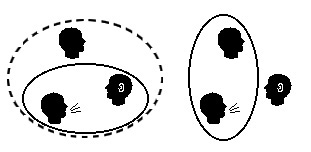
- intervention
- noun
- The action or process of intervening.
- Example: In theory, the approaches designed by CATI are in line with the holistic idea of extension services and its INTERVENTION, demanded by the National policy and recommended by the literature.
- fr: intervention

- language
- noun
- The principal method of human communication, consisting of words used in a structured and conventional way and conveyed by speech, writing, or gesture.
- Example: The population is a conglomeration of different immigrant tribes, each with a different LANGUAGE, however the Bantu are the original inhabitants.
- fr: langage

- learning
- noun
- The acquisition of knowledge or skills through experience, study, or by being taught.
- Example: The androgenic model asserts that five issues be considered and addressed in formal LEARNING.
- fr: apprentissage

- milestones
- noun
- An action or event marking a significant change or stage in development.
- Example: Strategic control should be exercised at set key MILESTONES, such as at the end of certain activity.
- fr: jalon

- motor
- noun
- Giving, imparting, or producing motion or action.
- Example: Continued neurological studies, related to the disorder apraxia, may reveal the beginnings of tool use and the communication systems for their continued production (Kempler, 1993); the techniques applied require skilled MOTOR control and advanced planning (Davidson, 1991) and Mithen argues the Levallois technique may be too difficult to acquire through observation alone, without verbal instruction (1996).
- fr: moteur

- observation
- noun
- The action or process of observing something or someone carefully or in order to gain information.
- Example: To do simple OBSERVATION; whether each team has its own separate open-plan office.
- fr: observer

- play
- verb
- Engage in activity for enjoyment and recreation rather than a serious or practical purpose.
- Example: The children were playing outside.
- fr: jouer

- positive
- adjective
- Constructive, optimistic, or confident.
- Example: All of these arguments support the view that it is POSITIVE and desirable to bring farmer experimentation and formal experimentation into closer contact, and that this proximity has already generated synergies in a number of projects.
- fr: positif

- practice
- noun
- The actual application or use of an idea, belief, or method, as opposed to theories relating to it.
- Example: The principles and practice of teaching.
- fr: pratique

- reinforcement
- noun
- The process of encouraging or establishing a belief or pattern of behavior, especially by encouragement or reward.
- Example: Lieberman, Gauvin, Bukowski and White (2001) found significant causes to be peer pressure to be thin, social REINFORCEMENT and body related teasing.
- fr: renforcement
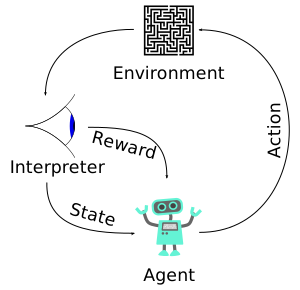
- sensory
- adjective
- Relating to sensation or the physical senses; transmitted or perceived by the senses.
- Example: Objective correlative and SENSORY manipulation become paramount in evoking elusive moods and states of mind.
- fr: sensorielle

- skills
- noun
- The ability to do something well.
- Example: Hence, the following paragraphs elaborate on particular SKILLS.
- fr: compétences

- time
- noun
- The indefinite continued progress of existence and events in the past, present, and future regarded as a whole.
- Example: This all costs money and TIME.
- fr: temps
